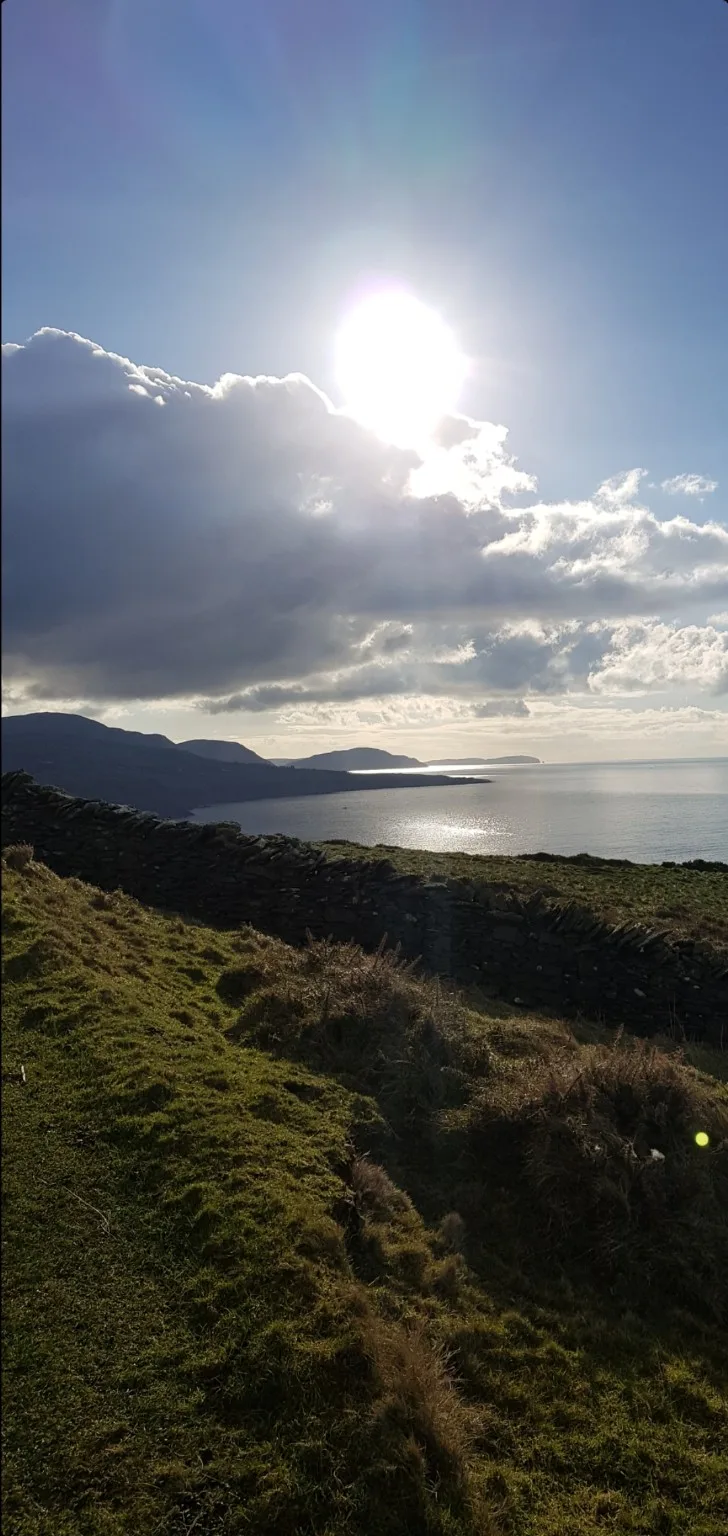
Bay ny Carrickey · Isle of Man
Port St Mary Regatta.
Feel the breeze. Read the tide. Race the local fleet.
The local fleet
Race for the corrected-time win
Times appear as each boat finishes. A winner is confirmed when the race closes.
| Place | Boat / design | Progress | Elapsed | Rating × | Corrected |
|---|
At the helm
Your view: follow your yacht in 3D chase, see the course from the fleet camera, or switch to the tactical chart. Tap the water or the small course map to steer.
Steer: hold your mouse or finger on the water, or use A/D or ←/→. You cannot sail straight into the wind: tack from side to side on upwind legs.
Trim: wheel or 1–9 (1 tight, 9 eased). Watch the efficiency meter. On a broad reach or run, press S to hoist the spinnaker and J to furl the jib. Drop the kite and unfurl the jib before heading upwind.
Race: cross the start, round the numbered marks in order, leaving them to port, then cross the finish. Red stern lights mean port tack; green means starboard. Space pauses. Crew assist sails your boat for you.
Graphics: Auto suits most devices and lowers sharpness a little if the race stops running smoothly. Low is the fastest. High and Ultra add sun shadows across the whole view, soft contact shadows and photographic sky light, and are meant for desktop computers.
Fleet, handicaps & tidal sources
Club scoring uses the published IOM Yacht Club multipliers: corrected time = elapsed time × rating. Portsmouth uses elapsed time × 1000 ÷ PN. Lower corrected time wins. Fleet results use actual simulated finish times; boats that do not finish are marked DNF.
Flying Fifteen has a 2026 RYA Portsmouth number. SB20 and Melges 24 use historical numbers reproduced in the 2026 limited-data list; the other boats use explicitly labelled game estimates. This is a mixed-fleet game, not an official race result.
Tango has the strongest computer crew and Cool Comfort the weakest: requested game difficulty settings, with published club ratings kept intact. Boat polars are simplified estimates. Foillan is rendered as a keelboat from your photo; the club entry labels its design “2000”, so its class remains unconfirmed.
The game uses the site's digitised Bay ny Carrickey tidal atlas, timed to predicted Liverpool high water and scaled for the tidal range. It begins at the current time and advances with the 30× race clock. Arrows are interpolated predictions, not measured live currents. Some atlas hours have sparse or estimated coverage. The race wind is a selectable practice wind.
Real hazards include the Carrick, its nearby shoal, Alfred Pier and coastal rocks. Chart geometry and shallow-water boundaries are simplified for play; this game is not a navigation chart. Pier geometry: © OpenStreetMap contributors.
The 3D view draws the south of the island from real data. Imagery: contains modified Copernicus Sentinel-2 data (2025). Terrain: Mapzen/Tilezen; SRTM/GMTED2010 courtesy of USGS; European terrain includes EU-funded Copernicus EU-DEM; global ETOPO1 courtesy of NOAA (terrain attribution). Coastline, building outlines, beaches and piers: © OpenStreetMap contributors, ODbL. Building heights, roofs and colours are estimates. The sun is placed for the race date and time; after dark the view keeps that day’s afternoon light. Sky lighting on High and Ultra uses Poly Haven photographs (CC0; sources). Waves follow the practice wind but are a game approximation, and the yachts are drawn about ten times larger than life so they are easy to follow. Graphics: three.js (MIT), postprocessing (Zlib) and N8AO (ISC).
2026 club ratings ↗Cool Comfort rating ↗RYA Portsmouth Yardstick ↗Manx tidal atlas ↗Port St Mary harbour ↗
